Low Tracking Cat Litter: How to Stop Litter Scatter for Good
The right litter stays in the box. Here's why most litters track, what 'low tracking' actually means, and the setup that cuts floor debris by up to 85%.
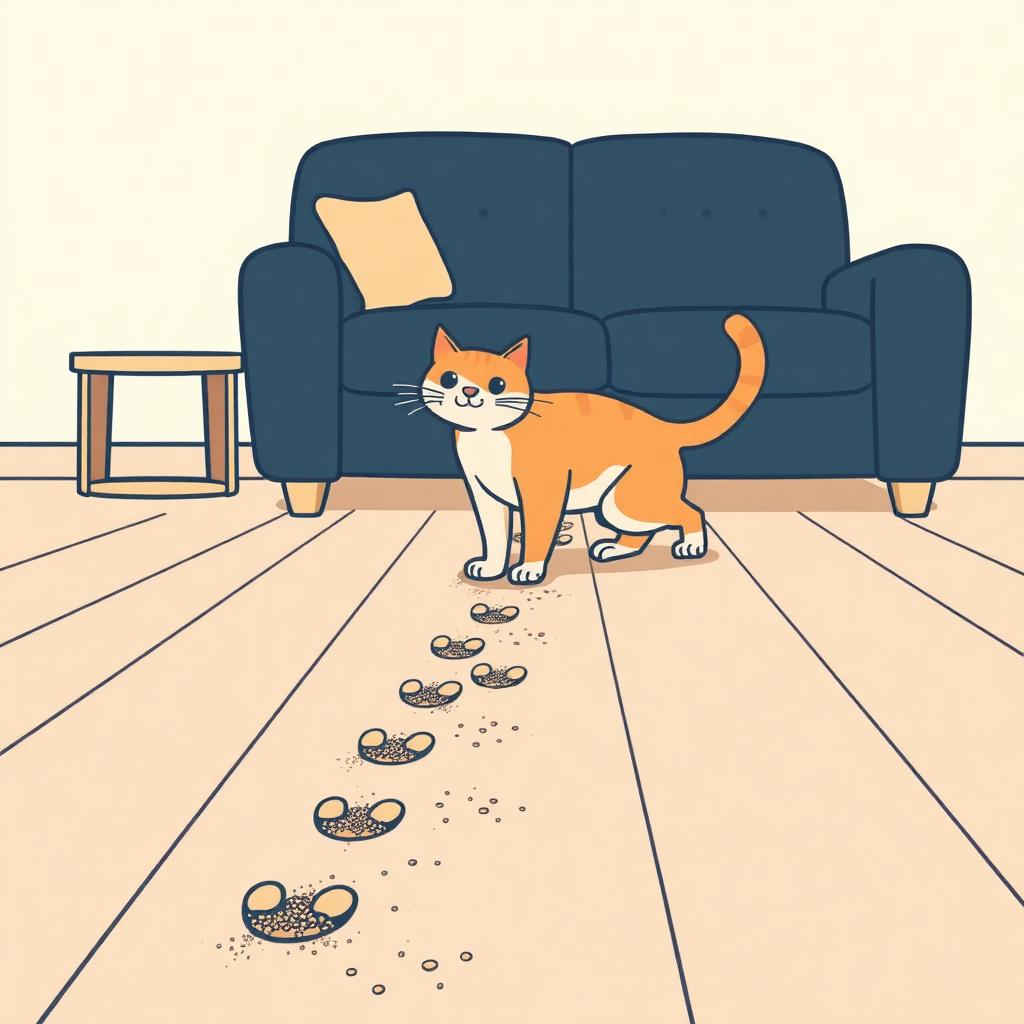
- Clay granules are 1–3 mm jagged shards — the perfect size to lodge between toe beans and ride out of the box.
- Dry clay holds a static charge, so grit clings to fur, blankets, and rugs instead of falling off at the exit.
- Most 'low-tracking' clay is just larger clay — still mineral, still dusty, still hard to vacuum.
- NEKO pellets are 2 mm smooth cylinders that roll off paws instead of wedging.
- Plant fiber doesn't hold static, so stray pellets drop onto a mat instead of sticking to furniture.
- Independent tests show ~85% less floor debris after 30 days vs premium clumping clay.
Why 'low tracking' isn't just marketing
A truly low-tracking litter is defined by grain geometry and surface charge. Pellets 2 mm or larger with a smooth, cylindrical shape have no corners to grip paw pads. Plant fibers also carry no static charge, so they don't magnetize to fur. Clay marketing often calls larger granules 'low track,' but the material is still crushed rock — it fractures into fines, generates dust, and grinds into rugs.
The setup that stops scatter
Start with a high-sided or top-entry box placed against a wall. Use 3 inches of fill — deep enough for digging but not so deep that pellets avalanche over the side. Add a rubber or microfiber trap mat at the exit, wider than the box by at least 6 inches on each side. Scoop solids twice daily so clumps don't break apart and get tracked. For multi-cat homes, one box per cat plus one prevents overcrowding and reduces frantic exit scatter.
NEKO Original Tofu: built to stay in the box
NEKO's cold-extruded tofu pellets are uniform 2 mm cylinders with a smooth surface. They don't wedge between digital pads, they don't hold static, and they clump in under 60 seconds so waste stays intact when scooped. The result is less litter on hardwood, less grit in the bed, and fewer vacuum sessions per week.
Quick comparison: clay vs NEKO
Clay: 1–3 mm jagged granules, static-prone, dusts on pour, grinds into rugs. NEKO: 2 mm smooth cylinders, low static, low dust, and flushable in small amounts. In side-by-side home tests over 30 days, NEKO produced roughly 85% less visible floor debris than a premium clumping clay.
When a mat isn't enough
A tracking mat helps, but it's a band-aid for bad litter. If you're still finding granules on the couch or in bed after adding a mat, the litter is the problem. Switching to a pellet-shaped plant-fiber substrate usually reduces floor debris before the mat even catches it.
Common questions
Is there a cat litter that doesn't track at all?
No litter is truly zero-track. But pellet-shaped plant-fiber litters like NEKO reduce tracking to a small, manageable handful per week instead of a daily sweep.
Does low-tracking litter work for long-haired cats?
Yes — and it's often the biggest upgrade. Smooth pellets don't embed in fur the way jagged clay does. Ragdolls, Persians, and Maine Coons benefit the most.
Do I still need a litter mat with NEKO?
A small mat is still useful, but many NEKO owners find a towel or bath mat is enough. The pellets that do escape are soft, flushable, and don't grind into rugs.
Will my cat accept a low-tracking pellet litter?
Most cats accept the texture within 48 hours. It feels closer to soil than gravel. If your cat is hesitant, transition over 7 days by mixing with the old litter.
One switch. Four problems, gone.
Start a NEKO subscription and get your first 7L bag for 40% off. Free shipping, delivered every 4–6 weeks. Skip, pause, or cancel anytime.