Natural Litter Versus Clay: How Plant-Based Options Compare in Everyday Use
Get a practical framework for comparing natural litters with clay on dust, odor, weight, tracking, and cleanup.
- The box smells fine on day one, then turns sour fast once urine builds up.
- Dust coats the floor, hangs in the air, and ends up on paws, furniture, and lungs.
- Heavy bags are awkward to carry, pour, and store in small spaces.
- A litter that clumps well may still track badly or stick to the box during cleanup.
- Compare litter by daily use, not marketing claims: dust, odor control, clumping, weight, tracking, and disposal.
- Match the material to your cat and home setup, especially if you have kittens, asthma concerns, or multiple boxes.
- Use the right box depth, scoop frequency, and transition method before deciding a litter has failed.
- If you want a lighter, low-dust plant-based option, a tofu litter like NEKO can solve the handling and cleanup issues clay often creates.
What cat owners are really comparing with natural litter versus clay
Most people searching natural litter versus clay are not asking an abstract materials question. They want to know what daily life will feel like after two weeks of use. Will the room smell cleaner. Will scooping be faster. Will there be less grit underfoot. Will the bag feel like a gym session. Clay litter has been the default for years because it is familiar, widely available, and usually forms solid clumps. Natural litters are a broad category that includes tofu, wood, paper, corn, wheat, and blends, so performance varies more than many labels suggest. That is why broad claims like “better for the planet” or “strong odor control” are not enough. The useful comparison is practical: how the litter behaves when urine hits it, how much fine dust it releases when poured, whether stool dehydrates or just sits there smelling up the room, and how easy it is to keep the box at a stable level without wasting half the bag. If you judge litter by those daily mechanics, the choice gets clearer fast. The best litter is rarely the one with the loudest claims. It is the one your cat accepts and your household can maintain without constant annoyance.
Material matters because it changes the mess before you even scoop
Clay and plant-based litters start with different physical properties, and those differences show up immediately. Most clumping clay litter is made from bentonite, a mineral that swells when it absorbs liquid. That swelling helps create firm clumps, but it also means the product is naturally dense and heavy. Plant-based litters use fibers or starches from materials such as tofu, wood, corn, or paper. Those ingredients are typically lighter than clay and often absorb liquid into a porous structure rather than relying on mineral expansion alone. In everyday use, that can mean easier lifting and less strain when refilling boxes. It can also affect the texture under a cat’s paws. Some cats like the fine, sand-like feel of clay. Others adapt quickly to small pellets or granules if the box is kept clean. The downside of the natural category is inconsistency. One wood pellet product may barely track but can feel too large for a picky cat. One tofu litter may clump quickly and pour cleanly, while a paper litter may control dust well but not odor. So the useful question is not whether natural is universally superior. It is which material behavior lines up with your priorities: weight, airflow, absorption speed, paw feel, and how often you are willing to scoop.
Dust is not just a housekeeping issue
Dust is where clay often loses points in real homes. When you pour a fresh bag of clay litter, especially a fine-grain formula, you can usually see at least some airborne particles. Those particles settle on the rim of the box, the nearby floor, and eventually anywhere your cat walks. For some households that is a mild irritation. For people with asthma, allergies, or a litter box tucked into a bathroom or laundry closet with poor ventilation, it becomes a bigger problem. Dust also affects cats directly. They are close to the box when they dig, and they groom whatever ends up on their paws and coat. Plant-based litters are not automatically dust-free, despite what some labels imply, but many are noticeably lower in airborne dust because the particles are larger or the material is less brittle. Tofu litter, in particular, is often chosen by owners who want the handling of a scoopable litter without the same powdery cloud common with clay. Lower dust has a second benefit: cleaner clumps and cleaner box walls. Fine dust can turn urine residue into a muddy film at the bottom of the tray. Less dust usually means less scrubbing and less of that unpleasant paste that makes you reconsider every life choice that led to litter box duty.
Odor control depends on moisture management, not perfume
Good odor control is mostly about getting urine out of circulation fast. Fragrance can mask smells for a while, but once the liquid spreads, breaks apart, or soaks into the base layer, the room tells the truth. Clay controls odor by absorbing moisture and locking some of it inside firm clumps when the formula works well. That is why many cat owners stick with it: a solid clump removes the problem before ammonia has time to build. Natural litters can perform just as well in this area, but the mechanism differs by material. Tofu and other starch-based litters tend to absorb quickly and form scoopable masses. Wood can help through natural dryness and odor absorption, though pellet systems behave differently from clumping granular products. Paper is often soft and low-dust but may lag on odor if the wet spots sit too long. The key is not whether the litter smells scented when new. It is whether the wet portion stays compact and removable. In multi-cat homes, that distinction becomes obvious within a few days. If the clumps break apart during scooping, odor control drops sharply because contaminated granules stay behind. A truly effective litter keeps the dirty part contained, lets air circulate through the clean layer, and does not need heavy perfume to seem clean.
Weight and carrying effort matter more than people admit
Litter is one of the few household products that asks you to pay repeatedly for moving rocks around. Clay’s density is both its strength and its nuisance. A heavy litter tends to sit firmly in the box and can feel stable under a cat’s paws, but it is harder to carry upstairs, lift from a car, pour one-handed, or store in a small apartment. If you manage multiple boxes, the inconvenience compounds quickly. Plant-based litters are often meaningfully lighter by volume, which changes the job from a chore to a routine. That does not sound dramatic until you are carrying refills through a narrow hallway while your cat supervises from a judgmental distance. Lighter litter can also make complete box changes less annoying, which means owners are more likely to do them on time. There is a practical tradeoff, though. Some very light litters can scatter more easily if the granules are tiny or if the cat digs like an archaeologist. Box design helps here: higher sides, an entry mat, and keeping the fill level reasonable all reduce scatter. Still, if back strain, stairs, pregnancy, aging joints, or simple convenience are part of your decision, natural litters have a clear day-to-day advantage. A lighter bag does not improve clumping by itself, but it makes the whole maintenance cycle easier to sustain.
Tracking and box cleanliness come down to particle shape and clump strength
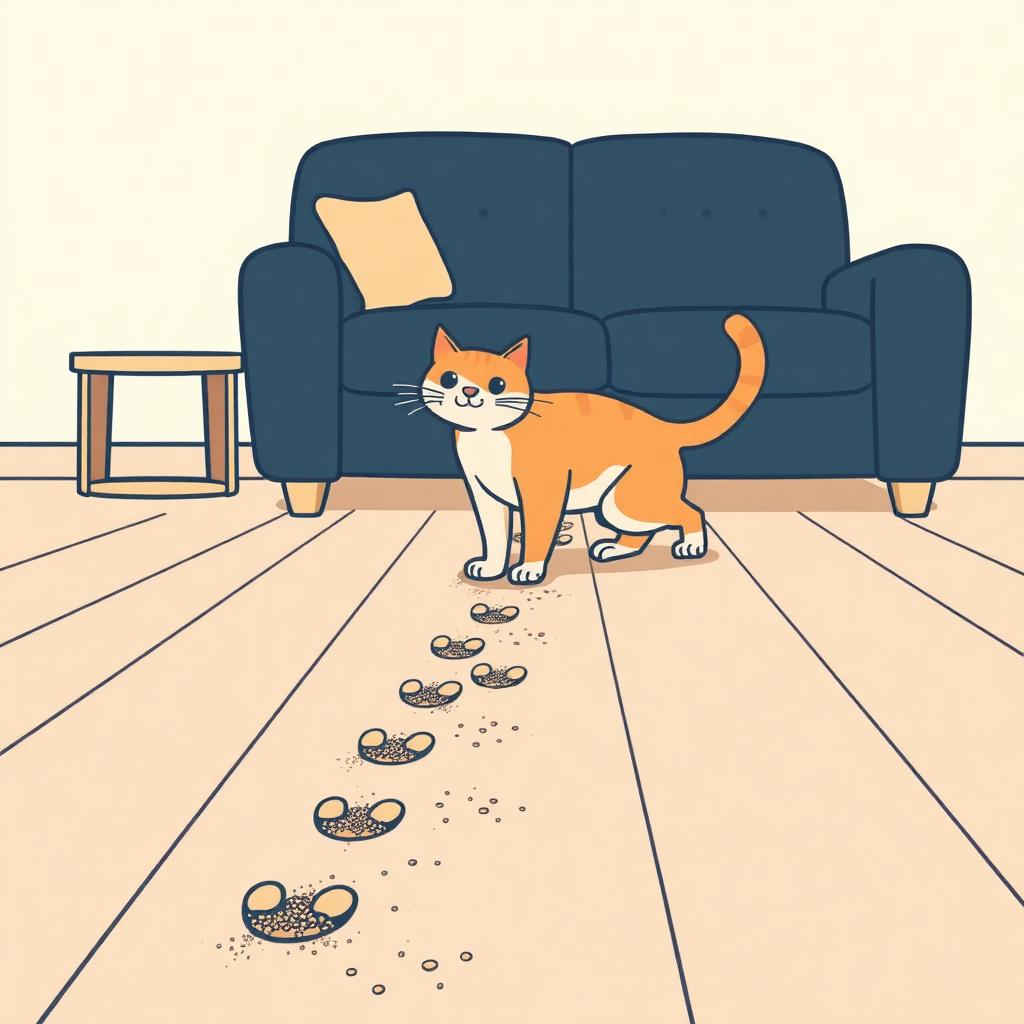
Tracking frustrates people because it feels random, but it usually is not. Litter tracks when particles are small enough to lodge between paw pads, light enough to flick out during digging, or dusty enough to coat fur and travel beyond the box area. Clay often uses fine grains that mimic sand, which many cats like, but those same grains can spread surprisingly far. Natural litters vary more. Large wood pellets usually track less, though some cats dislike the texture. Small tofu pellets or granules can offer a middle ground: easier on paws than big pellets, often less dusty than fine clay, and easier to see and sweep when a few pieces escape. Clump strength matters too. Weak clumps break apart and create extra loose particles, which then get tracked around. A box that stays cleaner internally also stays cleaner externally because there is less sticky residue on paws after urination. To reduce tracking, owners often focus only on mats, but setup inside the box matters more. Fill to an adequate depth so urine does not hit the base. Scoop twice daily if possible. Keep one to two steps of clear floor space after the box exit. And do not overfill. Cats that sink too deeply tend to dig harder and launch more litter. The cleanest floor usually starts with the cleanest clump.
Cleanup and disposal are where the small differences become expensive
A litter can seem acceptable until deep-clean day. That is when material choice becomes painfully clear. Clay often forms strong clumps, but if urine reaches the bottom before it sets, the clump can cement itself to the tray. Scraping that off is tedious, and once the base gets scratched, residue tends to stick more easily the next time. Some plant-based litters release from the bottom more cleanly because they absorb quickly through the top layer or form lighter clumps that do not harden like plaster. Tofu litter is popular partly for this reason: many owners find it simpler to scoop and less likely to create a heavy slab fused to the box floor. Disposal also differs. Standard clumping clay is not light in the trash, and hauling out full waste bags adds up fast in multi-cat homes. Many natural litters are easier to bag, tie, and carry because the waste volume feels less dense. But this is where labels can confuse people. “Natural” does not mean you should flush it without checking local plumbing guidance and manufacturer instructions. Septic systems, old pipes, and municipal rules all matter. The safest habit is simple: scoop frequently, bag waste promptly, and wash the box on a schedule that prevents buildup rather than trying to rescue a box that has been ignored for ten days.
How to choose the right litter for kittens, picky cats, and multi-cat homes
Edge cases are where blanket advice falls apart. Kittens need extra caution because they may taste litter while exploring, so many vets recommend avoiding some clumping products until the kitten is older and reliably using the box without chewing the contents. Cats with respiratory sensitivity often do better with lower-dust options, regardless of whether they are clay or natural. Picky adult cats can be intensely loyal to a fine-grain texture, so switching from clay to a pellet-style natural litter may fail for reasons that have nothing to do with odor control. In those cases, choose a plant-based product that is closer in size and feel to what the cat already accepts. Multi-cat homes need clump integrity and odor management above almost everything else because the box gets tested harder, faster. If one litter breaks down under repeated use, the whole room notices. Transition method also matters more than owners think. A gradual mix over about a week usually works better than a sudden switch, especially for cautious cats. Start with mostly old litter, then increase the new one every couple of days while keeping the box extra clean. If you want to try a plant-based litter without changing your entire setup, begin with one box. That gives you a clean comparison on odor, tracking, and cat acceptance before you commit across the house.
A practical scorecard for deciding what belongs in your box
The simplest way to compare litters is to stop asking which category is best and start scoring the one in front of you. Use the same checklist for each product over at least a week: visible dust while pouring, odor at 24 hours, clump strength during scooping, amount tracked outside the box, ease of lifting the container, and how cleanly the box base releases after use. If a litter claims superior odor control but leaves crumbly clumps, score it down. If another one is light and low-dust but your cat refuses it after a fair transition, that matters more than packaging promises. For many households, clay still wins on familiarity and reliable clumping. For others, plant-based litter wins because it lowers dust, reduces carrying effort, and keeps cleanup less miserable. That is the honest comparison. There is no single perfect substrate for every cat. There is a best fit for your priorities and your cat’s tolerance. If your biggest complaints are dust, weight, and box residue, a tofu-based litter such as NEKO is a sensible place to test because it addresses those exact daily frustrations. If your cat only accepts fine clay texture, the practical answer may be to improve your box setup rather than force a material they hate. The scorecard keeps the decision grounded in real use, not hopeful marketing.
Common questions
Is natural litter versus clay really better for odor control?
Sometimes, yes, but it depends on the specific product and your scooping habits. Clay often controls odor well because it forms firm clumps that remove urine quickly. Many plant-based litters can match that if they absorb fast and stay intact during scooping. If a natural litter crumbles, odor usually gets worse because contaminated particles remain in the box.
Do cats usually prefer clay or plant-based litter?
Many cats accept clay easily because the fine texture feels familiar underfoot. Plant-based litter acceptance varies more by shape and size. A cat that rejects large pellets may do fine with smaller tofu granules. If your cat is picky, switch gradually and keep one box with the old litter during the trial.
Does natural litter track less than clay?
Often, but not always. Fine clay granules commonly stick to paws and spread farther than owners expect. Some natural litters use larger particles that are easier to contain and sweep up. Tracking depends on particle size, dust level, clump quality, and how vigorously your cat digs, so box setup matters too.
Is plant-based litter safer for cats with asthma or allergies?
Lower-dust litter is usually the goal, not a specific label. Many plant-based litters produce less airborne dust than clay, which can help sensitive cats and people. But natural does not automatically mean hypoallergenic. Watch for dust during pouring and digging, and ask your vet if your cat has ongoing respiratory signs.
Can you flush natural litter?
Do not assume you can. Some plant-based litters are marketed as flushable, but local plumbing conditions, municipal rules, and septic systems all affect what is actually safe. Even flush-friendly claims deserve caution. Bagging waste is the safer default unless both the product instructions and your home setup clearly support flushing.
One switch. Four problems, gone.
Start a NEKO subscription and get your first 7L bag for 40% off. Free shipping, delivered every 4–6 weeks. Skip, pause, or cancel anytime.