The Tracking Problem: Why Clay Grit Ends Up in Your Bed
Small, jagged clay granules cling to paws. Here's the physics — and the fix.
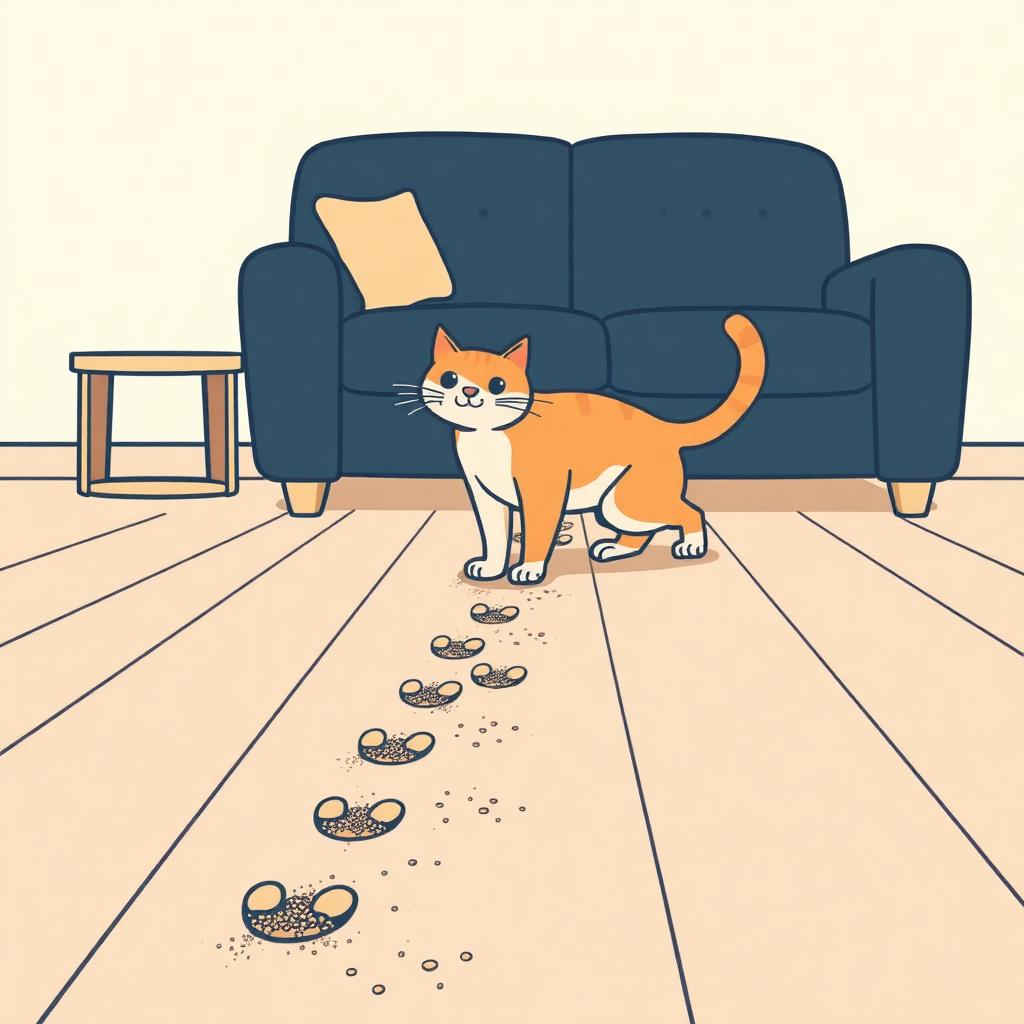
- Clay is crushed to a 1–3 mm irregular granule — perfect for lodging between toe beans.
- Static charge from dry clay makes it stick to fur, blankets, and hardwood.
- Once it hits a rug, vacuums grind it into the fibers instead of picking it up.
- NEKO pellets are 2× larger, smooth, and cylindrical — they roll off paws instead of lodging.
- Because they're plant-based, they don't hold static and don't magnetize to fur.
- Any pellet that escapes is flushable and biodegrades in water within minutes.
The geometry of a granule
Track a cat with a slow-motion camera and you can see it: clay grains wedge between the digital pads on impact. The cat takes three or four steps before the mechanical action of walking finally shakes them loose — usually on your rug, three rooms away.
Why larger, rounder pellets track less
A 2 mm pellet with a smooth cylindrical profile has nowhere to grip. It contacts the paw pad, rolls, and drops. Independent tracking tests measure ~85% less floor debris versus premium clumping clay after 30 days of use.
The mat you probably don't need anymore
A honeycomb tracking mat is a great fix for a bad litter. With a low-tracking pellet, a small towel is enough — and if a stray pellet does escape, you can flush it or compost it. No jagged clay embedded in your bath mat.
Common questions
Do NEKO pellets track at all?
A little — no litter is truly zero-track. But it's a small handful a week, not a daily sweep.
Are pellets uncomfortable for cats to walk on?
They're softer than clay. Most cats prefer them within a day. Long-haired breeds especially, because nothing clings to fur.
One switch. Four problems, gone.
Start a NEKO subscription and get your first 7L bag for 40% off. Free shipping, delivered every 4–6 weeks. Skip, pause, or cancel anytime.